 BookedWork Pro
FREE calculator
Landscape job pricing calculator
Build a project price from crew time, materials, other direct costs, overhead and your target margin.
Cost breakdown + printable worksheet + CSVOpen FREE tool →THE LANDSCAPING BUSINESS LIBRARY
Free tools and field guides for the business behind your best landscaping work.
See how it works for landscapers
Follow Jordan’s fictional planting-bed request through BWP’s inquiry, email follow-up and estimate-appointment workflow. Choose a sample time and see it carried into the dashboard.
Interactive product illustration. No signup or audio. This does not access a calendar, send email or book an appointment.
My leads / new inquiry
“We’d like to refresh the front bed and make it easier to maintain. We want to keep the tree. Could we arrange a site visit?”
The customer’s request stays with the lead. An inquiry has not yet become an approved design or a won project.
Email follow-up / illustrative preview
Thanks for sharing your project, Jordan. A site visit will help us understand the space, your priorities and any questions to resolve before pricing.
You can choose an available estimate-visit time, or reply with a question.
Choose an estimate appointment →Automated email follow-up is a Growth feature, included in the FREE trial. Actual delivery requires completed setup and appropriate email consent.
Estimate appointments / sample availability
These are fictional available times, not your calendar. The real product requires connected Google Calendar and availability setup.
Selected sample: Thursday · 1:00 PM
This is an estimate site visit. It does not confirm an installation start date or approve the project scope.
Dashboard / prepared for the visit
Visit note: retain existing tree; review access, measurements, selections and open site questions.
Follow-up stops after booking in this illustrated workflow. Scheduled is not won. Your team still reviews, prices and performs the actual work.
Step 1 of 4. Explore at your own pace.
Choose the work in front of you
Choose the job step. Get the tool that moves it forward.
Measure the work, build the cost and test the price.
Related field guide: Estimating a landscape project with access and seasonality →Build a project price from crew time, materials, other direct costs, overhead and your target margin.
Cost breakdown + printable worksheet + CSVOpen FREE tool →Convert measured bed area and your chosen depth into cubic yards, cubic feet and whole bags.
Volume calculation + whole-bag count + CSVOpen FREE tool →Build an itemized estimate, compare options and carry reviewed work into an invoice.
Printable document + editable working copyOpen FREE tool →Prepare the visit, define the proposal and show your own work.
Related field guide: Landscaping proposals: state what survives the install →Create a site-visit brief that separates customer goals, verified scope and questions still needing review.
Printable project brief PDF + editable working copyOpen FREE tool →Prepare named areas, included work, selections, exclusions and the next approval step.
Printable review PDF + editable working copyOpen FREE tool →Combine your own permissioned project photos into a branded PNG. Photos stay on your device.
Square or landscape PNGOpen FREE tool →Keep the current scope, crew instructions and handoff together.
Related field guide: Landscape design to crew handoff →Record a requested revision, its scope, price and timing effects, and the decision still needed.
Printable review PDF + editable working copyOpen FREE tool →Organize completed scope, installed selections, open items, care instructions and follow-up ownership.
Printable review PDF + editable working copyOpen FREE tool →Plan monthly capacity, equipment spending and cash using your own assumptions.
Capacity + cash model + CSV + editable planOpen FREE tool →Connect the invoice, actual payments and remaining balance.
Related field guide: Landscape job closeout and care handoff →Itemize actual work, discounts, tax settings and previous payments, then print a customer-ready invoice.
Invoice PDF + editable working copyOpen FREE tool →Record a payment actually received and the remaining invoice balance.
Payment receipt PDF + editable working copyOpen FREE tool →Designed to read, print and keep
Three eight-page business fieldbooks, with worked examples, checklists and reusable worksheets. Plus the complete eight-page Willow Court example pack. Direct downloads. No email gate.

FREE · 8 pages · PDF
Site quantities, person-hours, complete job costs, margin versus markup, and a reusable estimating worksheet.
Download FREE fieldbook ↓
FREE · 8 pages · PDF
Turn a site visit into a proposal, separate allowances from inclusions, and carry approved changes to the crew.
Download FREE fieldbook ↓
FREE · 8 pages · PDF
Completed scope, installed records, open items, care ownership, invoices and payments in one closeout process.
Download FREE fieldbook ↓
FREE · 8 pages · PDF
A fictional brief, estimate, proposal, approved change, closeout, invoice and partial-payment receipt that reconcile.
Download FREE fieldbook ↓One fictional project. Every record.
Walk through Willow Court’s brief, estimate, proposal, accepted change, handoff, invoice and partial-payment receipt. The documents agree on the scope and the money.
Explore the completed project →Go deeper on the project question
SPECIALIST BUSINESS FIELD GUIDES
Four detailed workflows with worked examples and editable field worksheets. Choose the kind of work you actually do.
Explore the specialist guides →
A better first conversation
A customer has a vision. You need the goals, site details and open questions in one place. Prepare the visit, clarify the scope and give the next conversation a useful starting point.
Create a FREE project brief →Selected for Landscaping
Landscape installations need project scope and crew handoffs; recurring mowing has its own estimator and operating guide. Start with these project resources and shared business tools.
Pricing recurring mowing instead? Use the mowing estimator → or explore lawn care resources →.
 Landscaping RESOURCE
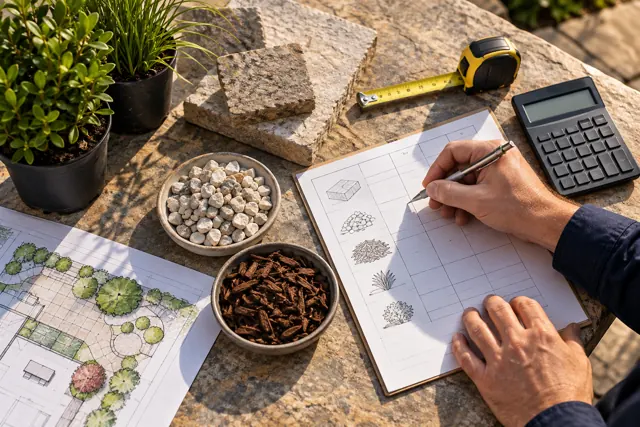
The installed cost of a bed or patio depends on site preparation, access for materials, soil removal, plant sizes, irrigation, edging, and maintenance expectations.
Practical guideRead this guide Landscaping RESOURCE
A designer's sketch may omit plant substitutions, irrigation zone boundaries, or homeowner-selected materials. Record final selections before the truck is loaded.
Practical guideRead this guide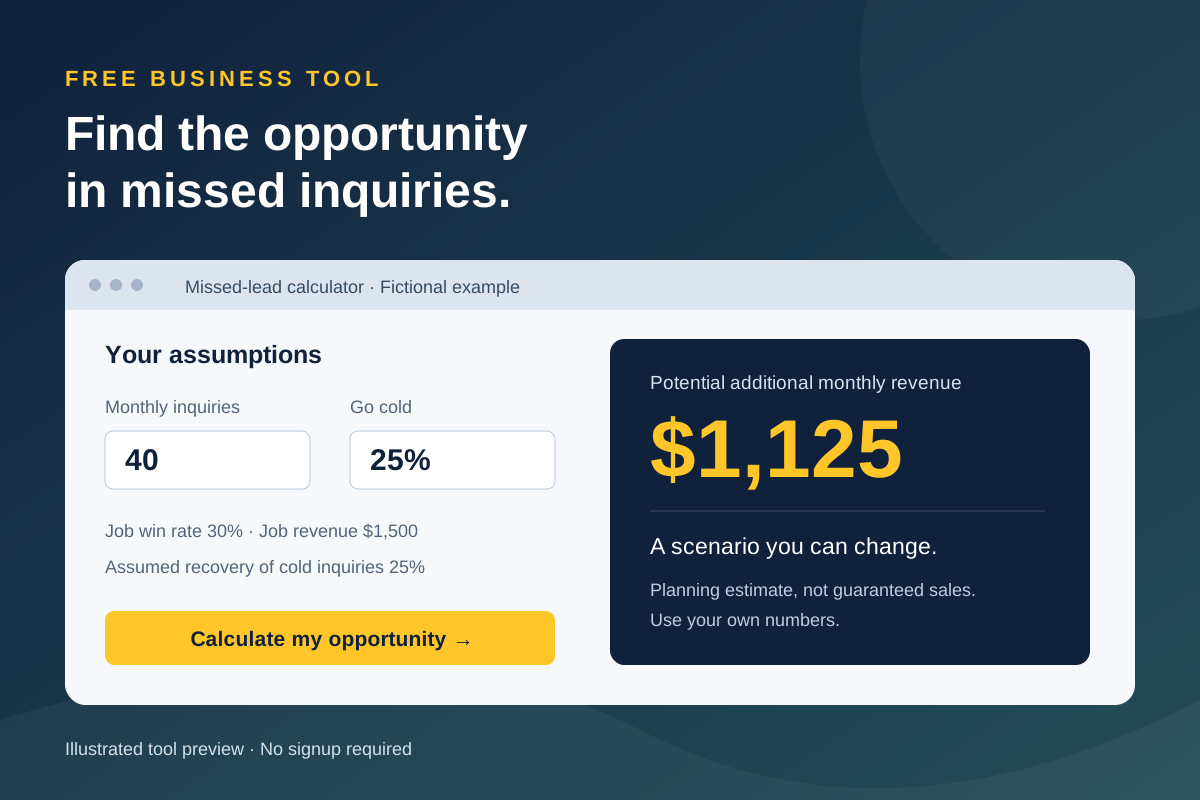 SHARED CONTRACTOR RESOURCE
Explore a revenue scenario using your own assumptions.
On-screen calculationUse this resource SHARED CONTRACTOR RESOURCE
Adapt three helpful replies and know when to stop.
Copyable email templatesUse this resourceFREE to use · No account required. Use your own job details; no trial required.
Specific questions. Useful answers.
Booked Work Pro organizes inquiries and estimate appointments; it does not create landscape designs, engineer drainage or manage construction production.
Landscape project field guide
A new planting bed, a patio landscape and a recurring maintenance request should not all land in the same appointment slot. Start by identifying the work your business actually offers, the property location and the customer's reason for making a change. Ask what they want the space to do, rather than promising a design from a few photographs.
Explain what the next meeting includes. A short qualification call, a paid design consultation and an installation estimate are different commitments. State any visit fee or design deliverable before confirming it; do not assume the customer understands your process. Route mowing inquiries to the Lawn Care workflow instead of spending a design appointment on a recurring-service quote.
Bring the customer's brief to the property and compare it with what is actually there. Record the areas to retain, remove and change. Note access width, delivery and staging options, existing surfaces, overhead obstacles, pedestrian use and protection needs. A gate measurement matters if the proposed equipment cannot reach the work.
Observe sunlight and shade, visible slope, wet areas, soil condition and existing plants. Separate observations from conclusions: “water visible beside the patio after rain” is a useful record; “a French drain will fix it” is a design recommendation that needs appropriate assessment. Do not promise to redirect runoff without checking downstream effects, lawful outlets, property boundaries and applicable approvals.
Identify work that needs a qualified designer, irrigation professional, arborist, engineer or licensed specialist. Plan utility-location requirements before ground disturbance and follow the applicable local process; photographs and the customer's memory are not a substitute for locating utilities. The sources below provide background, not permission to excavate or a complete job safety plan.
Break the proposal into work that can be checked: removal and disposal, site preparation, supplied materials, installation, protection, cleanup and aftercare. State how quantities were established and which details remain provisional. Distinguish the measured area from material ordering allowances; do not hide access costs or assume every square foot has the same preparation.
For plants, identify the agreed species or specification, size, quantity and substitution approval process. For a surface or constructed feature, identify the approved drawing and product specification rather than treating a generic material name as a complete design. Confirm deliveries, storage, equipment access and restoration of areas disturbed by the work.
Keep an allowance separate from a fixed inclusion. If a condition cannot be verified before work, explain the assumption and the process for stopping, pricing and approving a change. A customer should be able to see whether irrigation work, electrical work, drainage design, permits, demolition, haul-off or future maintenance is included. Adapt the scope to the actual project and local requirements.
“Low maintenance” needs a definition. Ask whether the goal is less mowing, less watering, fewer seasonal tasks or a simpler planting palette. Those choices can lead to different designs. Use regional plant guidance and site conditions to select suitable plants; a plant's marketing label does not prove it fits the property's light, soil, space or climate.
Where irrigation is part of the work, coordinate plant selection and water needs with the qualified irrigation designer. EPA WaterSense describes grouping plants with similar watering needs into hydrozones. Do not promise a universal watering schedule or a fixed water-saving percentage from the concept alone. Newly installed plants and established landscapes may need different care, and actual conditions govern.
Put the customer's maintenance responsibilities into the handoff. Specify who will check the installation, which care instructions apply and where the customer should raise a concern. Discuss any warranty terms as written in the agreement; avoid implying that every plant loss is automatically covered or automatically the customer's fault.
Thanks for reaching out about [landscape request]. We serve [area] and can talk through the right next visit. Would [option A] or [option B] work for a walkthrough or service call?
This is an original fictional message to adapt. Confirm who attends, what will be reviewed and which information the customer should bring. Keep the estimate appointment separate from a production start date. Weather, site readiness, permits, procurement and crew availability may affect installation sequencing.
After the visit, send a clear recap of the agreed objective, open questions, proposal timing and responsible person. Follow up according to the customer's requested timing and stop when the person declines or the next step is booked. A useful update explains what happens next; it does not repeatedly ask whether they have read the estimate.
The handoff should include the current plan, scope, material selections, quantities, access and protection notes, site contacts and any known exclusions. Record who may approve changes. A text message about a plant substitution should not quietly become the crew's only record of the agreed design.
Before mobilizing, confirm site readiness, required qualifications, utility procedures, deliveries and the job-specific safety plan. OSHA distinguishes landscape maintenance and construction activities; do not assume every task falls under the same set of requirements. Address the work actually being performed, including equipment, excavation, overhead lines, heat and public access.
At closeout, walk the work with the customer, document remaining items and give care information appropriate to the installed products and plants. Record who owns each punch-list item and when it will be checked. Obtain permission before using property photographs in marketing. Keep the service record useful without publishing private addresses, access details or customer information.
This original business workflow is not an engineered design, a planting prescription or a substitute for a qualified site assessment. Regional extension guidance, product instructions, applicable local requirements and the actual scope govern technical work.
Landscape project library
In-depth guides to qualifying work, estimating, site decisions and customer handoff. Every article has a practical checklist to take into the next job.
Illustrative editorial photography; these scenes do not depict actual customer projects.

Choose between recurring maintenance and project work, plan routes and weather capacity, verify specialty requirements, and price work from actual crew time.
Read the project note →
Ask whether the request is mowing, cleanup, planting, irrigation, drainage, or a new design. Record property location, approximate affected area, access, and timing.
Read the project note →
A photo of a flower bed cannot show the property's microclimate, drainage, buried utilities, or how an irrigation zone performs. Ask what has struggled in previous seasons.
Read the project note →
The installed cost of a bed or patio depends on site preparation, access for materials, soil removal, plant sizes, irrigation, edging, and maintenance expectations.
Read the project note →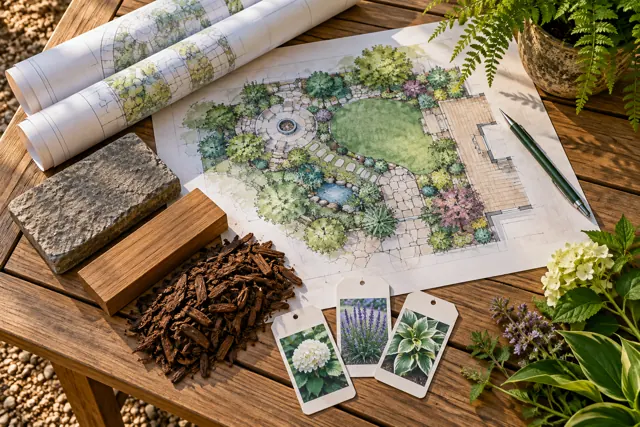
‘New front landscaping’ omits plant species and size, soil amendment, irrigation, mulch, and the homeowner's maintenance obligations.
Read the project note →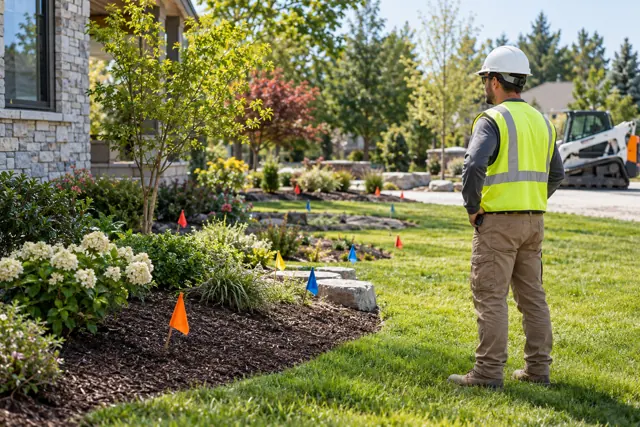
A property may have children, pets, low branches, power lines, buried utilities, and uneven ground. Collect access notes before sending a crew.
Read the project note →
A dead plant may reflect water, soil, light, or seasonal conditions; replacing it with the same species without diagnosis can repeat the problem.
Read the project note →
A request for ‘low maintenance’ can mean less mowing, less irrigation, or fewer seasonal tasks. Ask which burden the homeowner wants to reduce.
Read the project note →
Spring cleanup, pruning, irrigation startup, and autumn care have different timing by climate and species. Record which services the property actually needs.
Read the project note →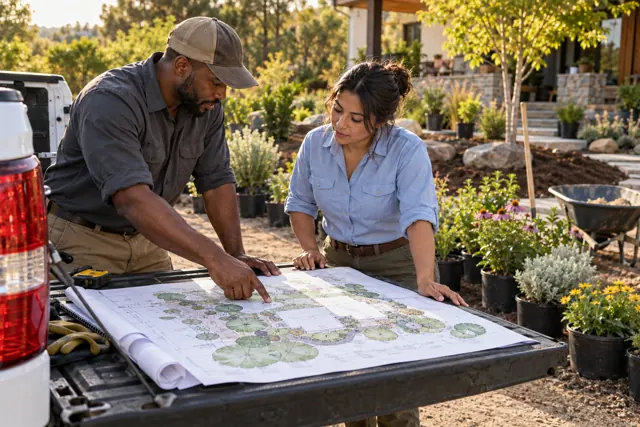
A designer's sketch may omit plant substitutions, irrigation zone boundaries, or homeowner-selected materials. Record final selections before the truck is loaded.
Read the project note →
A channel producing small spring cleanups is different from one producing long-term maintenance contracts or design-build work. Label these outcomes separately.
Read the project note →
A new planting project can look complete while establishment care is only beginning. The homeowner needs watering and maintenance expectations.
Read the project note →From inquiry to the next appointment
Organize landscape inquiries and estimate appointments with Booked Work Pro.
Start your FREE 14-day trialNo credit card required.
 Keep landscape changes visible from customer to crew