 BookedWork Pro
Landscaping business resources
Water-smart landscaping: choose plants for the site
Approx. 7 min read
A request for ‘low maintenance’ can mean less mowing, less irrigation, or fewer seasonal tasks. Ask which burden the homeowner wants to reduce.
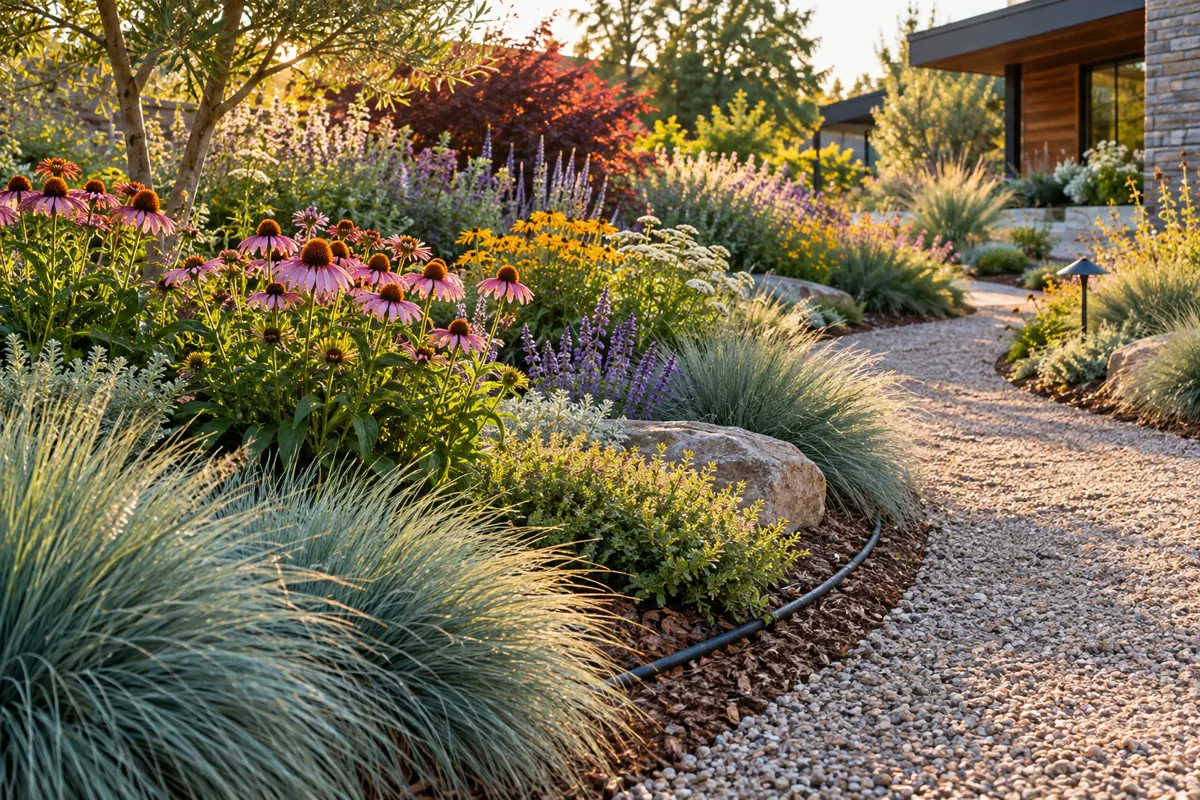
Illustrative photography, not an actual customer project. · BookedWork Pro editorial guide. A qualified professional must verify field conditions, local rules, and product instructions before a technical recommendation or price.
What the inquiry is really about
A request for ‘low maintenance’ can mean less mowing, less irrigation, or fewer seasonal tasks. Ask which burden the homeowner wants to reduce.
What a professional needs to establish
Evaluate local climate, exposure, soil, plant maturity, irrigation, and runoff. EPA WaterSense encourages water-smart choices that fit site and climate rather than one universal plant list.
How to explain the scope and next step
Compare alternatives by expected care and installed scope, not by a promised fixed water-bill reduction. Give a watering plan that responds to weather and establishment stage.
Put the decision into practice
Begin with the homeowner's goal, whether it is appearance, reliability, comfort, reduced upkeep, or a different use of the space. Compare alternatives by fit, site conditions, durability, maintenance, disruption, and the complete installation scope. A higher-priced product may require less preparation or more specialized work; show both rather than assuming the material price decides the job. Explain where product documentation, compatibility, testing, or code review matters. Use the same assumptions when comparing options and identify which decision is reversible before ordering. Do not promise a precise bill saving, project lifespan, or universal best choice without evidence for that property.
Build a fair comparison sheet
For each option list included components, preparatory work, work by other trades, user maintenance, expected disruption, warranty source, and decisions still needed. Compare the same site and goals; a product-only price is not comparable with an installed system quote. If the customer is still choosing, record the preferred option and set a date for a product or design conversation. A brochure may describe a product but cannot verify that it fits a particular building.
Define what water-smart means for this customer
Start with the household's actual goal. They may want less routine work, a planting style they prefer, better use of a space or a more appropriate relationship between planting and available water. These are related but different decisions. Ask which burden they want to reduce and which features matter most. Do not turn “low maintenance” into a promise of no care, or “water-smart” into a guaranteed bill reduction. Record the desired outcome in the project brief so the design conversation has a clear reference. A useful proposal explains the selected scope and responsibilities, while any claim about measured performance needs evidence from the actual property and conditions.
Use the site to narrow the options
EPA WaterSense and university extension guidance emphasize choosing plants and landscape approaches that fit the site and region. Record the relevant exposure, space, soil observations, existing planting and water arrangements. Identify which conditions need testing or specialist review before a recommendation. A plant described as drought tolerant in marketing is not automatically suitable for every location or every stage of establishment. Existing features, customer preferences and available care also affect the choice. The business workflow should preserve those decisions and open questions, rather than replacing them with a universal list of fashionable plants. Use local expertise and appropriate technical guidance for the actual planting plan.
Compare the whole landscape, not a plant label
A customer may consider retaining more of the established bed, changing part of the planting palette, adjusting the use of turf or redesigning a larger area. Compare options on the same goals and site assumptions. Include removal, preparation, installation, irrigation implications, protection, cleanup and future care in the scope discussion. A lower material price may not produce a lower installed cost. A different plant size may affect the finished appearance and the time the customer expects to reach it. Avoid portraying one option as universally superior. Explain what each option changes, what remains and which conditions or responsibilities must be confirmed before it can proceed.
Make water and irrigation decisions visible
WaterSense discusses grouping plants with similar watering needs and matching irrigation management to actual conditions. Where irrigation work is involved, identify the qualified person who reviews the existing system and the proposed planting. Do not assume that keeping the same emitters or schedule makes a changed bed appropriate. Record whether evaluation, adjustment or additional work is included, excluded or still under review. This guide does not prescribe a controller setting, application rate or watering schedule. The valuable project record identifies the responsibility and the point at which the decision must be made, so planting choices and water arrangements do not develop as disconnected promises.
Work through an honest comparison example
Imagine a fictional customer who wants a front bed that feels less demanding. They ask whether switching all plants will save water and eliminate seasonal work. A responsible first conversation separates those wishes. The site visit records what is established, what the customer likes, the relevant conditions and the care they can realistically provide. One option may retain suitable planting and change a limited area; another may involve a broader redesign and irrigation review. Compare installed scope and expected care tasks without inventing a universal savings percentage. The result is a decision the customer understands, rather than a price attached to an undefined promise of being maintenance free.
Budget for establishment and handoff
The project does not end when the last plant is installed. Identify the care information and any agreed follow-up that will accompany the completed work. Distinguish establishment responsibilities from longer-term maintenance, and explain who supplies the relevant instructions. Do not create one generic watering schedule for every site or assume the customer knows how the proposed landscape differs from the old one. Include handoff time in the work plan. If an ongoing service is a separate offer, state its boundaries and price separately. The FREE closeout and care worksheet can organize the instructions provided, the responsible people and unresolved questions without pretending to generate a planting prescription.
Keep substitutions and customer changes under control
Availability may change between planning and purchasing. A replacement should be reviewed against the actual specification, intended use, site fit, appearance and care requirements. Do not treat a matching nursery price as proof of equivalence. Record the proposed substitution and any scope, price or timing effects before the relevant approval is obtained. Carry the current version to the crew and the care handoff. A customer may also change priorities after seeing the cost comparison; update the scope rather than leaving the proposal, drawing and plant list to describe different projects. A well-managed change makes the final choice traceable without turning the conversation into a dispute about memory.
Measure only what you can support
If the customer wants to compare water use over time, discuss an appropriate measurement approach with the relevant professional. Weather, occupancy, irrigation changes, leaks, planting stage and other uses can affect a bill. Do not attribute every difference to the landscape work or present a planning assumption as a verified result. For your own business, track the accepted scope, actual costs, callbacks and customer questions. Those records help improve future proposals and handoffs. The guide's practical promise is better decision making and clearer records. Claims about a particular saving, plant outcome or technical suitability must remain grounded in the actual site, the work performed and appropriate evidence.
Trade-specific reference point
Plant and drainage choices depend on the property's soil and site conditions. Those details belong in the walkthrough, especially when runoff or a rain garden is part of the request.
This note supports a specific trade detail. It is not a diagnosis, a complete installation procedure, or a promise that every property needs the same work.
Practical checklist
- Ask which use, care or appearance problem the upgrade should solve.
- Record the features to retain and areas being changed.
- Compare options with the same scope boundaries.
- Verify access, removal, preparation and restoration implications.
- Review plant and product suitability with appropriate expertise.
- Show optional work and allowances separately from base work.
- Clarify what requires new review or approvals.
- Document the selected option and the next decision.
References and limits
These sources support the trade and business context; requirements vary by project and location. The job-specific observations, price, and safety plan belong with a qualified local professional.
Put this guide to work
Use the resource that fits your next step. These resources are FREE, with no account required.
- Landscape project brief builder →
- Landscape material volume calculator →
- Landscape proposal scope builder →
- All FREE landscape tools →
Use your own job details and the appropriate professional review.