 BookedWork Pro
Restoration business resources
Starting a restoration company: define response and competence
Approx. 7 min read
Choose restoration losses your trained crew can assess, set honest response coverage, plan equipment and follow-up capacity, and document scope without promising insurance coverage.
Published September 24, 2026 · BookedWork Pro editorial guide. A qualified professional must verify field conditions, local rules, and product instructions before a technical recommendation or price.
Choose losses the team can handle
Water from a known clean source, sewage, storm intrusion, fire residue, and suspected mold are not interchangeable jobs. List the loss types, property sizes, service area, and tasks the company is trained, equipped, insured, and authorized to perform. Separate emergency stabilization, assessment, mitigation, material removal, drying or cleaning, and reconstruction. Some jobs need a plumber, electrician, structural professional, environmental specialist, or insurer representative. Do not advertise every disaster service simply because the company owns extraction equipment. Define clear decline and referral rules for contaminated water, unknown substances, structural instability, or work beyond the crew's qualifications. Match the public service description to the people actually available for dispatch.
Verify requirements and worker protection
Check local contractor registration, specialty licensing, insurance, permits, waste disposal rules, and any requirements for mold or environmental work. Build task-specific training and protective procedures for electricity, unstable structures, flood contamination, respiratory exposures, chemicals, lifting, and confined access. OSHA's flood response guidance describes hazards that can require specialized training and equipment. Screen older painted surfaces and planned demolition for applicable lead-safe requirements, and use qualified assessors for suspected asbestos or other regulated materials. An automated intake should never pronounce a property safe, direct a homeowner to enter standing water near electricity, or give a remote clearance certificate. Give the responder authority to pause work and escalate when conditions differ from the call.
Staff the response promise
Write a duty roster showing who answers the phone, who screens hazards, who can travel, what vehicle and equipment is available, and who covers a job after the first visit. A 24/7 claim needs real trained coverage, not merely a voicemail or an ad answering service. Determine a realistic response window by territory and time of day and explain that safe entry depends on site conditions. For illustration only: if one on-call crew has eight usable field hours and an initial visit plus travel and documentation takes three hours, it can start at most two comparable visits while leaving two hours for overrun; an active project may reduce that further. This is a planning assumption, not a disaster-response benchmark. Track actual response and return-visit time before widening the promise.
Triage without diagnosing by phone
Ask for the address and safe callback number, what happened, when it was noticed, affected rooms, whether the source appears ongoing, occupancy, visible standing water or smoke damage, and any reported electrical, sewage, structural, or other immediate concern. Ask only for observations a caller can make safely. Route immediate hazards to appropriate emergency services or qualified professionals under a written protocol. Assign the request to a trained assessor, mitigation crew, or outside specialist, then give a clear next contact time. Do not guarantee that a material is dry, a space is habitable, or insurance will pay from a photograph or text. Preserve the caller's own description separately from the field team's findings.
Create an assessment and documentation path
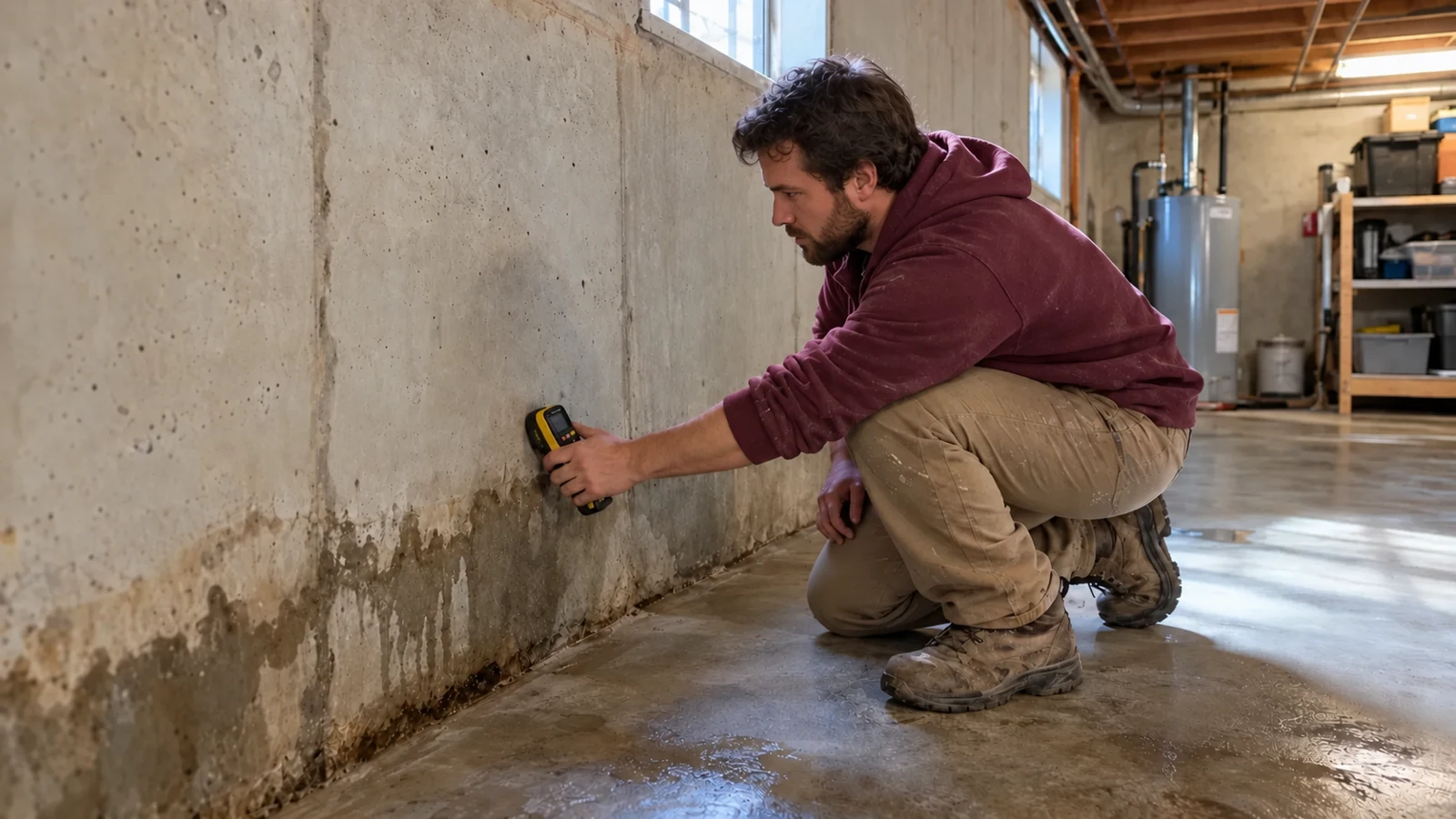
At the site, the qualified team records the loss history, observed source and affected areas, safety assessment, materials, photographs where appropriate, measurements and instrument readings with locations and times, work authorized, and what remains unknown. EPA's mold remediation guidance emphasizes addressing the moisture problem and assessing the extent of damage; its school and commercial guidance is context-specific and does not substitute for a residential job plan. Document the baseline and follow-up method suited to the actual loss rather than declaring a universal drying duration. Keep equipment placement, daily checks, removed materials, disposal, customer decisions, and stop-work reasons in one job record. Distinguish the contractor's observed facts from any insurer's coverage or claim decision.
Plan equipment and return visits together
Inventory extraction and drying or cleaning equipment by type and condition, power requirements, transport space, trained operators, maintenance, and how long units might remain on a site. One job can occupy machines for multiple days and require repeated monitoring visits; counting only the initial dispatch overstates capacity. Reserve vehicles and staff for equipment checks, replacement, documentation, and pickup. Decide when rented equipment or a partner is needed, and verify terms before promising availability. Consider whether the owner can safely occupy the space while work proceeds; route that decision to appropriate qualified people and authorities. Do not move equipment to a new job just to answer a lead if an active site still needs it under the work plan.
Price work and protect cash flow
Separate opening equipment, training, insurance and vehicle costs from fixed monthly overhead and variable job costs such as labor, rental, consumables, disposal, subcontractors, fuel and repeated monitoring visits. Use actual local quotes and a cash reserve for delayed payment, equipment damage, and callbacks. For a comparable completed job, collected price minus variable cost is contribution toward fixed overhead. SBA's simple break-even formula is fixed costs divided by price minus variable cost. Hypothetical example: $7,500 fixed monthly expense, $2,500 collected per similar job, and $1,000 variable job cost yield $1,500 contribution and five completed jobs to cover fixed expense. The example excludes taxes, financing, mixed loss types, unpaid claims and equipment tied up between visits. Check whether crew and machine calendars can actually support five completed jobs.
Explain authorization and insurer boundaries
Tell the owner what the company will inspect, the immediate authorized work, pricing or estimating method, equipment and return visits, material removal decisions, and who approves added work. Document scope changes when hidden damage or contamination is discovered. Keep photos, readings, invoices and daily records organized so the customer can share them with an insurer, while making clear that the insurer determines coverage and reimbursement under the policy. Do not state that the insurer has approved a job unless that specific approval is documented. At handoff record completed work, remaining source repair or reconstruction, final site observations, equipment removal, the customer contact, and any specialist or insurer decision still pending. Review actual response time, labor, equipment days, returns, direct cost, and callbacks by loss type each month.
Trade-specific reference point
Moisture source and affected materials matter to the assessment. EPA advises specialized help for extensive damage or contaminated water; a form cannot determine cleanup scope or insurance coverage.
This note supports a specific trade detail. It is not a diagnosis, a complete installation procedure, or a promise that every property needs the same work.
Practical checklist
- Choose loss types, property sizes, territory, and tasks the trained crew can accept.
- Verify local licensing, insurance, waste, and applicable specialty requirements.
- Write hazard triage, emergency referral, and stop-work rules for responders.
- Build a staffed duty roster before promising after-hours or 24/7 response.
- Inventory vehicles, equipment, operators, and return-visit availability.
- Record safe observations at intake without remote diagnosis or coverage promises.
- Document site conditions, readings, work authorization, changes, and daily checks.
- Include monitoring visits, rentals, disposal, and delayed payment in job economics.
- Calculate contribution and break-even from actual completed and collected jobs.
- Separate the contractor's work record from insurer coverage decisions.
- Close out open repairs, reconstruction, equipment removal, and customer handoff.
References and limits
These sources support the trade and business context; requirements vary by project and location. The job-specific observations, price, and safety plan belong with a qualified local professional.