 BookedWork Pro
Windows and Doors business resources
Starting a window and door installation service
Approx. 6 min read
Start a window and door installation service with a defined product scope, reliable site measurements, realistic lead times, water-management details, and a clear completion handoff.
Published September 24, 2026 · BookedWork Pro editorial guide. A qualified professional must verify field conditions, local rules, and product instructions before a technical recommendation or price.
Define the openings you will serve
Choose a starting offer such as like-for-like replacement windows, exterior entry doors, or a limited repair service. List the frame types, wall conditions, heights, building types, product suppliers, and geographic area your crews can handle. A damaged opening that needs temporary securing has a different response plan from a scheduled replacement. A new opening, structural modification, or rot repair can require additional design, permits, and trades. Write down what your team will assess, install, and refer. Do not market every size and material as an available same-day product: custom units, specialty glass, and finishes depend on actual supplier availability and an approved order.
Check local requirements and lead-safe work
Verify contractor registration, licensing, insurance, permits, inspections, and requirements for exterior changes in the jurisdictions you serve. For work in pre-1978 housing or child-occupied facilities, evaluate the EPA Renovation, Repair and Painting rule before advertising or disturbing painted surfaces; covered firms and workers need the applicable certification and lead-safe procedures. Window replacement is generally covered in the relevant buildings, while the facts of each job and any authorized state program matter. Document how the crew screens property age, who confirms the rule, and what containment and cleanup apply. Also plan safe access, lifting, glass handling, and weather protection for the actual site. Do not let an automated form declare a property exempt.
Create a two-stage measurement process
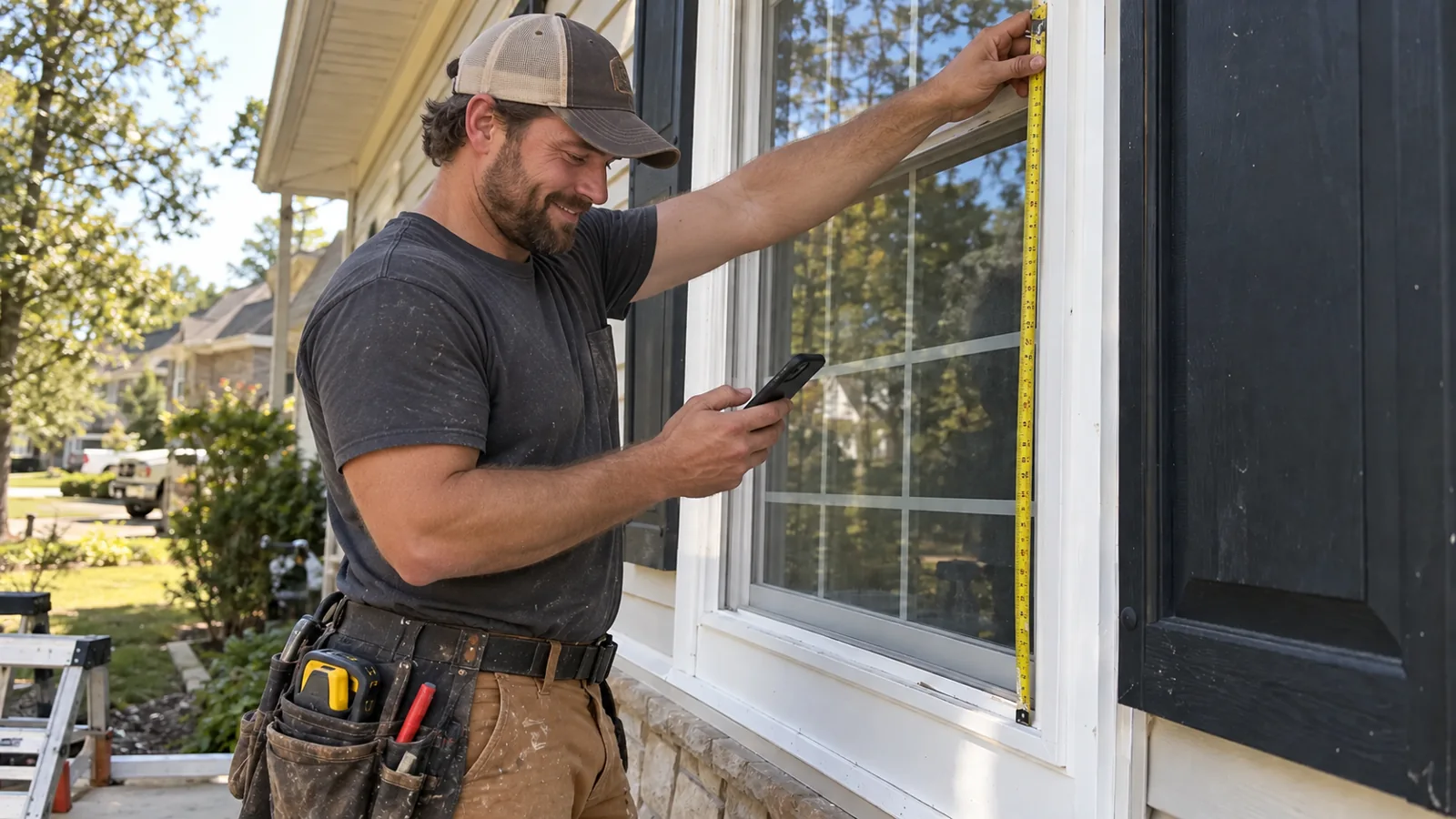
At intake ask for the address, opening count, approximate size, photos, location, existing frame material, visible damage, access, and desired product. These details route an assessment but are not manufacturing dimensions. At the site, a qualified measurer records each opening separately, product configuration, operation, handing and swing where relevant, wall and sill condition, trim and finish impacts, access, and possible concealed damage. Establish who signs off on final order dimensions and specifications. Number openings on the proposal, measurement record, supplier order, and installation plan so one room's product is not confused with another. If the opening cannot be accurately measured before removing trim or cladding, document the assumption and next verification gate before ordering.
Scope water, air, and finish interfaces
An installation plan should address how the new product connects to the existing drainage plane, flashing, sill, sealants, insulation, and interior and exterior finishes. DOE guidance explains that flashing at window and door openings directs water out of the wall cavity. Use the selected manufacturer's instructions and a site-specific detail; a generic bead of caulk is not a substitute for a complete water-management plan. Record existing leaks, rot, structural concerns, and out-of-scope remediation before removal when visible. Explain who will repair substrate, paint or stain trim, relocate shades or alarms, and dispose of old units. A replacement product's performance claim does not establish that the assembled opening will be leak-free without proper installation.
Budget cash around supplier lead time
Separate one-time equipment and training from monthly fixed expenses and per-job costs. Include insurance, vehicle, ladders and access equipment, measurement tools, software, and any lead-safe training or setup. On each order track product and freight, flashing and sealants, variable labor, disposal, trim repair, payment fees, and subcontractors. Get current supplier quotes with documented lead times, deposit terms, damage policies, and return or remake conditions. Keep cash for a damaged shipment, delayed installation, inspection, or callback. Do not book an installation date as final until the correct units and accessories are confirmed received and the jobsite is ready. A deposit is a funding and contract decision that must match local law and your actual supplier terms.
Calculate capacity and contribution by project
Allocate separate calendar time for measurement, product selection and approval, delivery verification, installation, inspection, and closeout. Hypothetical example: a two-person crew has four eight-hour field days available after reserving one day for overruns and callbacks. If a similar installation has historically taken two crew days including travel, preparation and cleanup, at most two such installations fit; unusual openings reduce that capacity. For a consistent project type, subtract variable job cost from collected price to estimate contribution toward fixed expenses. The SBA's simple break-even formula is fixed costs divided by price minus variable cost. With hypothetical $6,000 monthly fixed cost, a $3,000 average collected project price, and $2,000 variable cost, six completed projects break even. These assumptions are illustrative; use your own job mix, collections, labor and callback data.
Write the order and change gates into the proposal
The proposal should identify each opening, selected product and options, final measurement owner, removal method, flashing and finish scope, permits, anticipated lead time, installation window, exclusions, warranty terms, and how concealed damage or an incorrect product is handled. Require the customer's product approval and internal measurement review before releasing a nonreturnable order. If removal reveals decay or an incompatible rough opening, stop the affected work, protect the opening, document findings, and obtain the appropriate technical review and change authorization. Do not quietly substitute a different product, omit a component, or promise an installation date after a supplier delay. Record who updates the customer and when.
Close out with operation and job records
Before handoff, check operation, locks, screens and hardware, visible finish, and the installation checks specified for the product and project. Record completed flashing and sealing details as appropriate, product model and serial or order identifiers, permit and inspection status, any open finish work, manufacturer warranty conditions, labor warranty terms, and the callback contact. Show the owner how the installed unit operates and provide care instructions that match the product. Compare actual crew hours, damaged or reordered units, direct costs, and callbacks with the estimate. Review these measures monthly by opening type so future quotes and supplier choices improve from completed jobs rather than optimistic lead counts.
Trade-specific reference point
A product's U-factor and solar heat gain coefficient describe different performance traits. The installer should verify openings and product selection rather than price replacement from an approximate count alone.
This note supports a specific trade detail. It is not a diagnosis, a complete installation procedure, or a promise that every property needs the same work.
Practical checklist
- List supported window and door types, building types, heights, territory, and exclusions.
- Verify local registration, permit and inspection rules and screen applicable lead-safe requirements.
- Separate customer approximations from final professional order measurements.
- Number openings consistently across measurements, proposal, product order, and install plan.
- Document product configuration, handing, finishes, supplier terms, and lead time.
- Specify flashing, drainage, air sealing, substrate and finish responsibilities.
- Confirm products and accessories received before finalizing an installation slot.
- Reserve crew time for access, preparation, disposal, inspection, and callbacks.
- Calculate project contribution and break-even volume with your actual costs.
- Require approval for product order and any concealed-condition scope change.
- Record operation checks, warranty documents, inspection status, and callback ownership.
References and limits
These sources support the trade and business context; requirements vary by project and location. The job-specific observations, price, and safety plan belong with a qualified local professional.