 BookedWork Pro
An original Booked Work Pro field guide for painting business owners. Adapt the shared process for other trades without changing Google's rules.
1. Make sure your painting company qualifies
A Google Business Profile is intended for businesses that make in-person contact with customers during stated hours. A painting contractor who travels to homeowners is typically a service-area business. Do not create a fake storefront, rent a mailbox to look local, or list a home address as a public walk-in office when customers are not served there. Review Google's eligibility and service-area guidelines before starting.
Start at Google Business Profile. Sign in with an account the company controls. Search for your business first; if it already exists, claim it rather than creating a duplicate. Follow Google's ownership and verification instructions. Available verification methods vary, and Google decides which are offered. Never promise that every painter can verify instantly.
Jobsite example: A two-crew residential painter operating from a home office should normally set up a service-area profile, hide the residential address where appropriate, and list only the cities actually served. A legitimate showroom with permanent signage and staffed customer hours may be different. Check Google's current requirements for your situation.
2. Build a listing that earns a homeowner's confidence
Use the real business name—no keyword stuffing such as “Best Cheap House Painter Near Me” unless that is genuinely the business name. Choose an accurate primary category, add relevant services such as interior painting, exterior repaints, cabinet painting, and deck staining only if offered, and keep phone number, website, hours, and service area current.
Upload original, permissioned photos of completed jobs. A useful painter gallery includes clean cut-in lines, properly masked trim, repaired surfaces before primer, and finished rooms in natural light. Avoid publishing a homeowner's address, family photos, or personal belongings without permission. Explain your prep process: protecting floors, filling nail holes, caulking gaps where appropriate, spot-priming patches, and cleaning up at the end of each day.
Do not promise that filling every profile field guarantees top placement in Maps. Google's local results consider multiple factors, and ranking is not for sale through review requests.
3. Find your direct Google review link
After the profile is verified and managed by your account, open your Business Profile in Google Search or Maps while signed in. Locate Read reviews and the Get more reviews option where available. Copy the direct review link. Google's interface changes, so follow its current help article if labels differ: Create a link or QR code to request reviews.
Open the link in a private browser window to confirm it points to the correct painting company, not a similarly named business across town. Do not write a review for your own company. Store the link in your estimate and job-closeout templates so every crew leader uses the same destination.
If Google offers a QR-code option, download it from the Business Profile on a desktop browser, print it clearly, and test it with a phone camera before ordering cards. Put it on a leave-behind card, final invoice, or completion checklist—never on a sign that promises a reward for a five-star rating.
4. Ask at the right moment without pressuring anyone
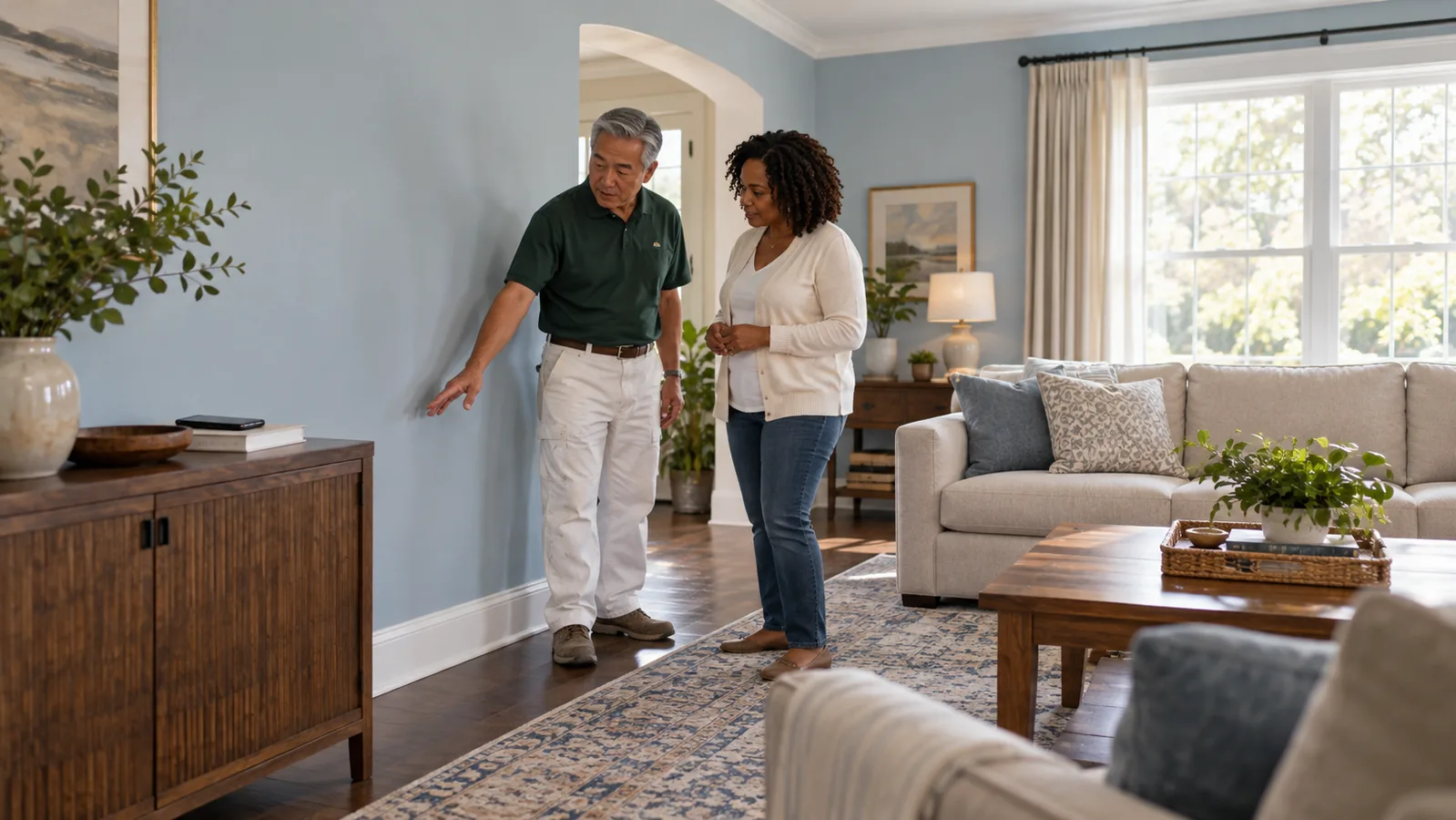
The best operational moment is usually after the final walkthrough, once the punch list is addressed and the homeowner has had a chance to inspect the finish. The request should be neutral and go to customers generally—not just the ones who praise the crew. Do not stand over someone while they type a review, ask them to mention particular keywords, or demand a five-star score.
What the foreman can say at the walkthrough:
“Thanks for having us out. If you've got a minute sometime, an honest Google review helps other homeowners know what it's like working with our crew. I'll send you the link so it's easy to find.”
Simple post-job email:
Subject: Thanks for trusting us with your painting project
Hi [First name],
Thanks again for having our crew work on your home. We hope you're enjoying the finished space.
If you have a minute, would you share your honest experience in a Google review? It helps neighbors looking for a painter understand what to expect.
[Leave a Google review]
If there's anything about the job you still need help with, just reply to this email and we'll follow up.
Thanks,
[Company / First name]
The review request must not offer a discount, gift card, contest entry, or other incentive. Never make review requests conditional on a satisfaction score. Keep any email outreach within applicable consent and unsubscribe rules.
5. Make it a repeatable closeout step
Add five checkboxes to the painter's closeout sheet:
- Walk the work with the homeowner and note any punch-list items.
- Confirm touch-ups, cleanup, and product/color handoff.
- Ask whether the customer has any outstanding concerns; address them without making review eligibility conditional.
- Send the same neutral review request to eligible completed-job customers using the approved link.
- Record that the request was sent, without tracking or pressuring the customer's rating.
For a small shop, the owner can do this every Friday. For a larger crew, assign the office coordinator or production manager. Do not send repeated nagging messages; one well-timed request and, where appropriate, one courteous reminder are usually enough.
6. Reply like a professional painter
Positive review: “Thanks for trusting our crew with the living room and trim repaint. We appreciate you noticing the prep and cleanup. Enjoy the fresh space!”
Critical review: “Thank you for explaining what happened. We're sorry the touch-up visit did not meet expectations. Please contact our office so we can review the job details and work toward a resolution.”
Do not disclose customer addresses, invoices, private disputes, or personal information in a public reply. Don't argue about sheen, flashing, lap marks, or coverage online; take technical troubleshooting into a private conversation, document what the crew observed, and agree on next steps. For reviews that appear to violate policy, use Google's reporting process rather than assuming every negative review can be removed.
7. Track whether reviews are helping win bids
Measure the number of completed jobs, requests sent, new genuine reviews, inquiries mentioning Google, estimate appointments booked, and accepted proposals. A useful monthly worksheet might show:
| Measure | Example |
|---|---|
| Completed painting jobs | 20 |
| Neutral review requests sent | 18 |
| New Google reviews | 5 |
| Google-sourced estimate requests | 12 |
| Estimates accepted | 4 |
These are illustrative numbers, not Booked Work Pro customer results or a promised conversion rate. Ask new prospects “How did you hear about us?” and record their answer even when analytics disagree. Review growth is one signal; profitable booked jobs and repeat customers matter more.
8. Mistakes that can cost a painter credibility
Do not buy reviews, ask employees to pose as customers, request only positive feedback, offer free touch-ups in exchange for reviews, or have homeowners review your company from a shared crew tablet. Google prohibits fake engagement, incentives, and selective solicitation. Never promise “a hundred five-star reviews in thirty days.”
For older homes, don't use review marketing as a substitute for safe work: disturbing painted surfaces in pre-1978 housing may trigger EPA Renovation, Repair and Painting requirements. This guide is about reputation, not a replacement for trade safety compliance.
9. Adapt this process to every contractor industry
The Google Business Profile setup, neutral review link, QR-code testing, incentive prohibition, and response process are reusable. Change the customer moment and examples by trade: a roofer asks after the final inspection and debris sweep; a plumber after the repair and water-test walkthrough; an HVAC contractor after commissioning and homeowner orientation; a landscaper after the property walkthrough; a painter after final cut-ins, touch-ups, and punch-list signoff.
The takeaway: Do clean work, close out the job professionally, make it easy for every eligible customer to leave an honest review, and respond respectfully. A reliable process builds a reputation that advertising alone cannot buy.