 BookedWork Pro
An original Booked Work Pro operating guide. Examples and worksheets are illustrative, not customer results or universal benchmarks. Verify job conditions and applicable requirements before acting.
Start with the substrate and application plan
Equipment follows the scope. An occupied wall-and-trim repaint, an exterior elevation and a cabinet finish do not require the same setup. Record substrate, coating system, application method, height, access, power, water, ventilation and customer constraints. Consult the actual coating and equipment instructions. A tool being available does not make a method suitable. Separate the equipment needed for this job from purchases you hope will create a new specialty later.
Load protection before production tools
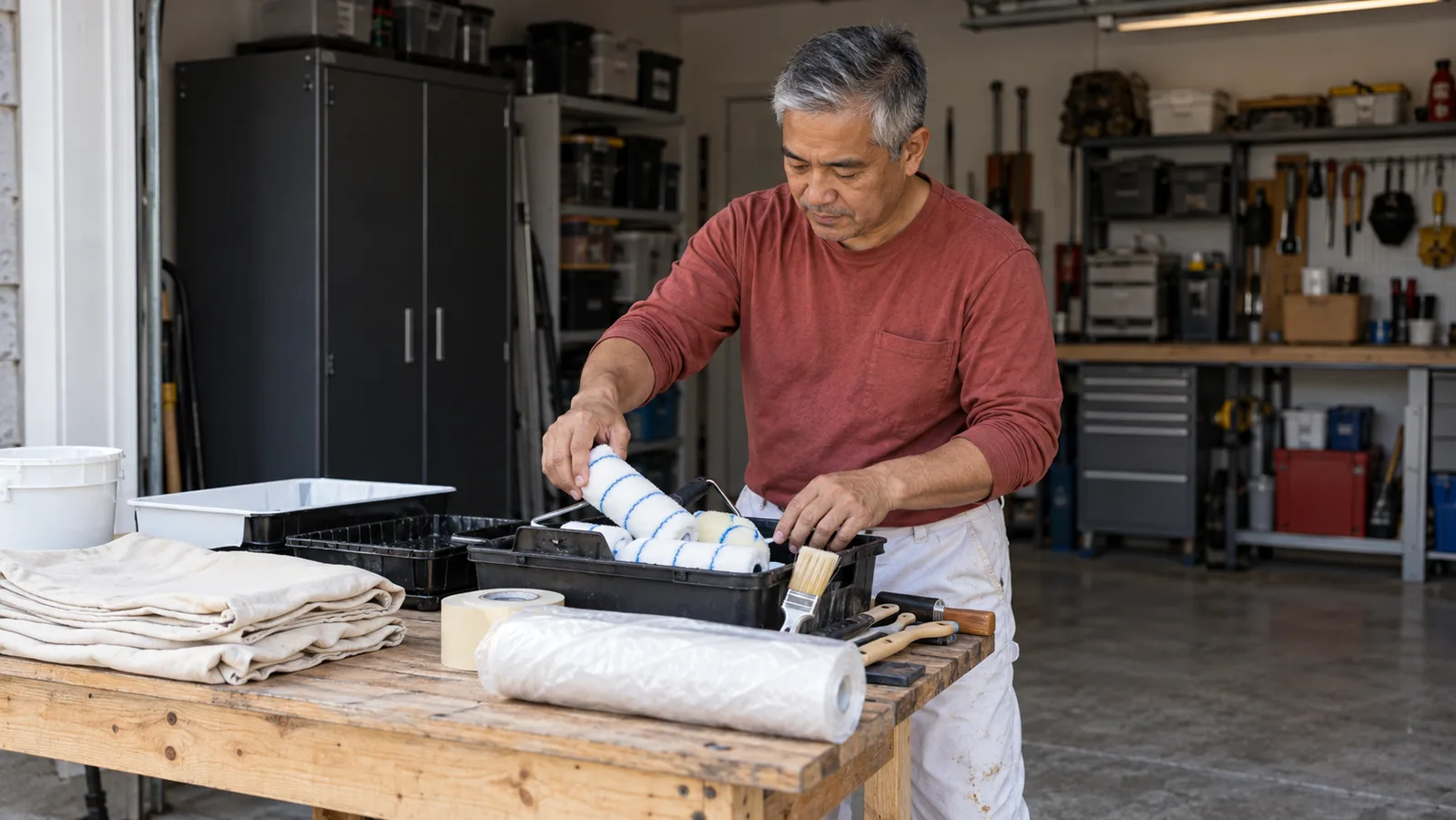
Plan floor and furnishing protection, masking materials compatible with the surface, temporary containment where appropriate, signs and a clear waste route. Check how adhesive products may affect delicate or recently coated finishes; test and follow their instructions. Define which furniture the crew moves and where removed hardware is labeled and stored. An extra roller frame is little help if the crew arrives without a way to protect the occupied room or keep children and pets away from work.
Match preparation tools to a safe work plan
Inspect scrapers, abrasives, dust collection, patching and caulking tools for the actual preparation specified. Do not treat dry sanding as a default for every old coating. Screen work that may disturb painted surfaces in covered pre-1978 properties for applicable EPA RRP requirements before selecting a method. Hazard evaluation comes before choosing respiratory protection or containment. A shopping list cannot replace training, exposure assessment or the qualified decisions required by the job.
Treat spraying as a complete system
Budget masking and containment, compatible hoses and tips, filters, pressure controls, cleaning and maintenance, safe storage and the operator training required by the equipment. Follow manufacturer instructions for pressure release and injection hazards; a small-looking high-pressure injection injury requires urgent medical assessment. Review ventilation and ignition hazards for the products and location. OSHA addresses construction spray operations in its ventilation standard. A disposable dust mask is not a universal substitute for an appropriate respiratory protection program.
Price access, maintenance and downtime
Inspect ladders and access equipment, plan stable setup and have qualified personnel decide whether scaffolding or a lift is appropriate. Include rental delivery, setup, training, transport, maintenance, cleaning time and consumables in the estimate. Compare buying with renting using expected use and total cost, not just the sticker price. In a hypothetical comparison, a $900 purchase used on six jobs starts at $150 per job before maintenance, storage or financing; that does not establish that buying is the cheaper option.
Check the van against the next day’s scope
Use a load-out sheet with a named checker, job address, coating schedule, protection, prep, application, access and cleanup categories. Verify correct products and labels, working tools, charged equipment and safe transport. At closeout, record failed tools, excess trips and unused purchases. Build a standard kit for repeatable work, then add job-specific equipment deliberately. Avoid publishing a single equipment budget as though it fits every painting company.
Put the decision on one worksheet
| Work stage | Check before loading | Cost often missed |
|---|---|---|
| Protect | Approved masking and floor protection | Setup and removal time |
| Prepare | Substrate-specific tools and controls | Dust collection and disposal |
| Apply | Product-compatible equipment | Tips, filters and cleaning |
| Access | Inspected suitable access equipment | Rental delivery and setup |
Field checklist
- Confirm substrate, product and application method.
- Screen older coatings and site hazards before disturbance.
- List protection and cleanup supplies.
- Verify access, equipment condition and training.
- Include maintenance, rental and extra-trip costs.
Use the next practical resource
Sources and editorial limits
The official references support specific business, safety or regulatory context. The job workflows, examples and worksheets are original editorial guidance. Requirements vary; these pages do not replace a qualified project assessment or legal, tax or employment advice.