 BookedWork Pro
Decks and Outdoor Living business resources
Deck estimate: footing and structural work before boards
Approx. 2 min read
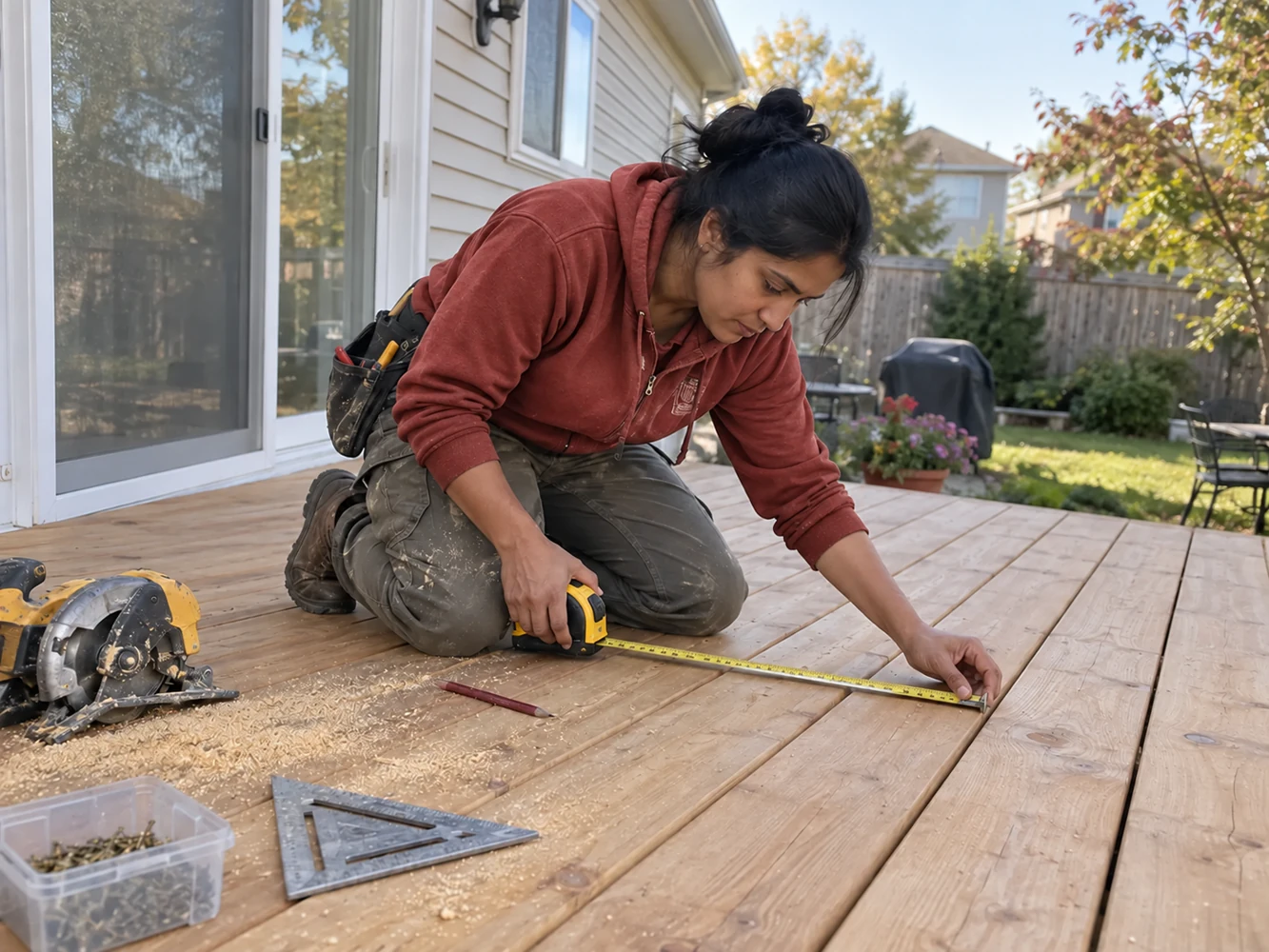
Board area alone omits excavation, footings, ledger flashing, framing, posts, stairs, guards, connectors, disposal, and permit or engineering costs.
Published September 24, 2026 · BookedWork Pro editorial guide. A qualified professional must verify field conditions, local rules, and product instructions before a technical recommendation or price.
What the inquiry is really about
Board area alone omits excavation, footings, ledger flashing, framing, posts, stairs, guards, connectors, disposal, and permit or engineering costs.
What a professional needs to establish
Measure site elevations and access, select a design meeting applicable requirements, obtain current product costs, and quantify foundation and connection work.
How to explain the scope and next step
Separate decking material options from structural scope. Explain how concealed rot or poor soil found during demolition changes design and requires written approval.
Put the decision into practice
Start with an observed scope and actual measurements. Price specific products from current supplier quotations and account for labor, access, surface preparation, equipment, disposal, permit needs, overhead, and work by other trades. Separate fixed work from alternatives and explicit allowances; otherwise a low initial number can mask a different project. Describe what remains hidden and what must be approved before its cost can be added. National averages are rarely a substitute for a professional site-specific price. After completion, compare forecast and actual costs by category so the next estimate improves instead of repeating the same oversight.
Audit the math before sending it
Keep quantities, supplier cost, crew labor, subcontractor cost, equipment, permits, disposal, overhead, and target margin on separate worksheet lines. Check that an allowance is not accidentally added twice or mistaken for a fixed-price item. A simple markup is not the same as gross margin: on $8,000 in costs, a 25% markup produces $10,000 revenue and 20% gross margin, while a 25% gross-margin target requires roughly $10,667. These are arithmetic illustrations, never trade-specific quoted prices.
Trade-specific reference point
Footings, posts, spans, and connections depend on the deck's actual geometry and applicable local code. The American Wood Council guide is a technical reference for qualified design review, not a remote safety verdict.
This note supports a specific trade detail. It is not a diagnosis, a complete installation procedure, or a promise that every property needs the same work.
Practical checklist
- Record the customer's own description and the property location.
- Confirm the site facts before making a technical claim.
- Explain the work, exclusions, and who owns the next step.
- Record a realistic response or site visit window.
- Close the lead when the customer books, declines, or opts out.
References and limits
These sources support the trade and business context; requirements vary by project and location. The job-specific observations, price, and safety plan belong with a qualified local professional.