 BookedWork Pro
Decks and Outdoor Living business resources
Deck construction safety during demolition and framing
Approx. 3 min read
Removing an old deck can expose unstable framing and leave a hazardous doorway. Ask about occupants, pets, ground access, and any exit that depends on the deck.
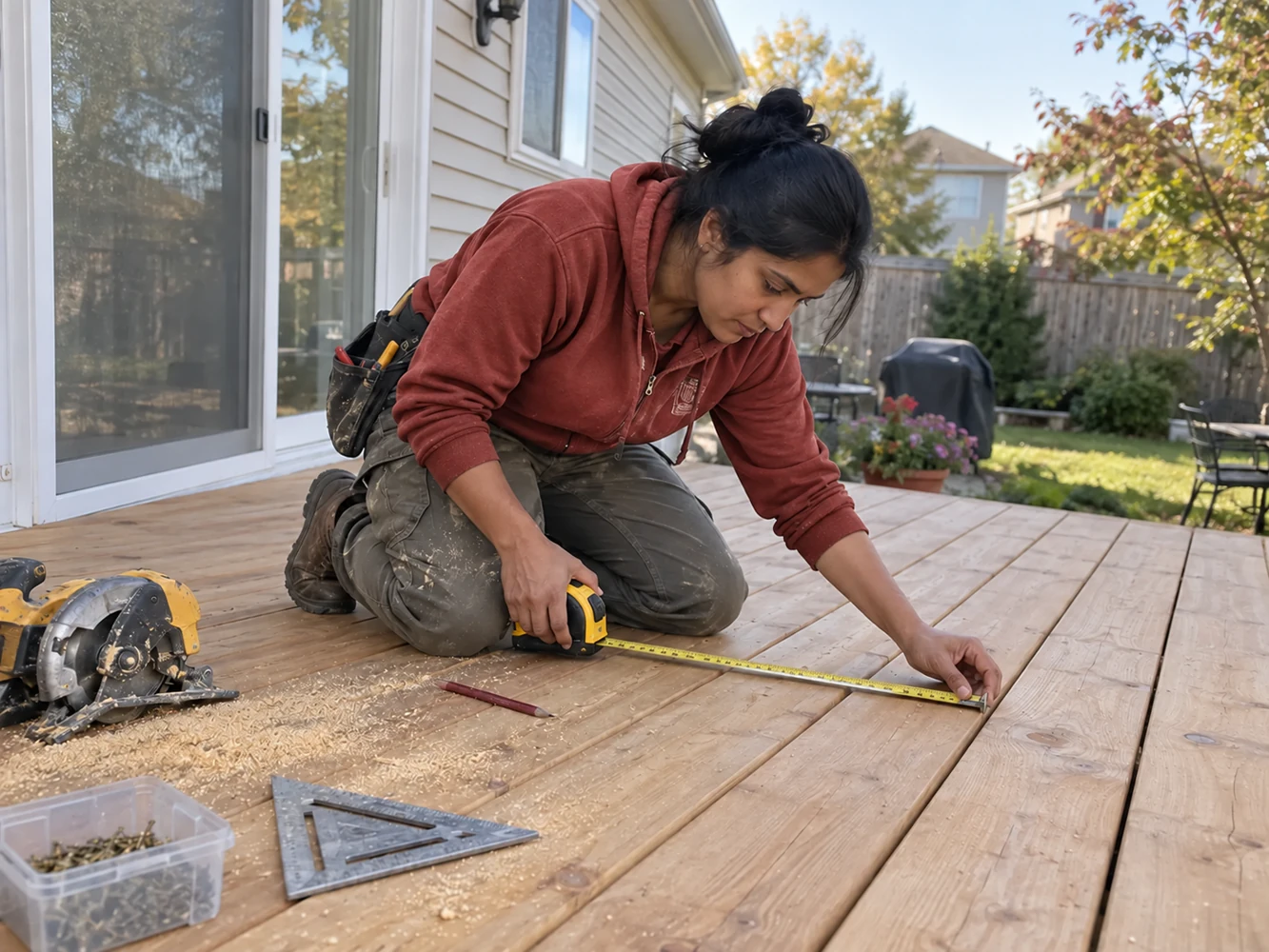
Published September 24, 2026 · BookedWork Pro editorial guide. A qualified professional must verify field conditions, local rules, and product instructions before a technical recommendation or price.
What the inquiry is really about
Removing an old deck can expose unstable framing and leave a hazardous doorway. Ask about occupants, pets, ground access, and any exit that depends on the deck.
What a professional needs to establish
The qualified crew assesses temporary barriers, demolition sequence, elevated access, excavation, utilities, lifting, and fall protection under applicable rules.
How to explain the scope and next step
Tell the owner when an exit is unavailable and how it will be protected. Stop if hidden rot or unstable supports make the planned sequence unsafe.
Put the decision into practice
The pre-job survey should record access, occupants, pets, utilities, equipment routes, weather, and adjacent surfaces or structures that could be affected. Decide who can stop work if conditions differ from the estimate and how the crew will isolate hazards from the customer. Train the people actually doing the work and give them the relevant manufacturer instructions and site details. The qualified crew must apply applicable safety rules to the actual job, including protection for elevated access or excavation when relevant. A photograph or web inquiry cannot establish whether a method is safe; if a hidden issue appears, reassess before proceeding.
Build a stop-and-reassess rule
Identify conditions that would halt the work: unsafe access, unexpected energized equipment, suspect material, unstable structure, missing product instructions, or weather outside the safe work plan. Assign a qualified lead to assess the change and decide what documentation, specialist, or approval is needed before resuming. Tell the customer when a stop affects the schedule. A detailed plan may still change after work starts; the point is to have a reliable decision process when reality differs from the estimate.
Trade-specific reference point
Footings, posts, spans, and connections depend on the deck's actual geometry and applicable local code. The American Wood Council guide is a technical reference for qualified design review, not a remote safety verdict.
This note supports a specific trade detail. It is not a diagnosis, a complete installation procedure, or a promise that every property needs the same work.
Practical checklist
- Record the customer's own description and the property location.
- Confirm the site facts before making a technical claim.
- Explain the work, exclusions, and who owns the next step.
- Record a realistic response or site visit window.
- Close the lead when the customer books, declines, or opts out.
References and limits
These sources support the trade and business context; requirements vary by project and location. The job-specific observations, price, and safety plan belong with a qualified local professional.