 BookedWork Pro
Concrete and Masonry business resources
Starting a concrete and masonry business: choose the work
Approx. 6 min read
Choose concrete or masonry work your crew can deliver, assess access and drainage, plan placement and curing around conditions, and price equipment and return visits.
Published September 24, 2026 · BookedWork Pro editorial guide. A qualified professional must verify field conditions, local rules, and product instructions before a technical recommendation or price.
Choose a narrow project range
A walk, driveway, decorative patio, retaining wall, block enclosure, and structural repair need different design, base preparation, equipment, crews, and inspections. Decide which jobs the company will take first by use, size, property type, territory, and material. List the work the crew can self-perform, what an engineer or specialty trade must design or review, and which requests it will decline. An apparent crack or sinking slab does not establish a cosmetic fix; movement may have a cause outside a surface repair. Publish distinct offerings and explain when a site assessment is required. Record no-fit inquiries without making an unsupported promise to add structural work later.
Confirm permits, design and safe work
Check local contractor registration, insurance, excavation and permit rules, inspection milestones, and when a licensed designer or engineer is required. Verify property lines, utility locating responsibilities, site access, and any approvals for runoff or work near public areas. Build a crew safety plan for excavation, formwork, reinforcement, moving trucks and pumps, wet concrete contact, material handling, and masonry wall stability as relevant. OSHA's concrete and masonry construction standards and silica guidance apply to covered work; cutting or grinding concrete and masonry needs a task-specific exposure plan. Do not treat every retaining wall as a simple landscape feature, and do not quote a structural repair from a photograph alone.
Use the site visit to define the base and drainage
At intake ask for the address, proposed use, approximate dimensions, existing surface, slope, access for trucks and equipment, observed standing water or movement, and the customer's desired finish. At the site, measure the actual work area and note grades, runoff direction, adjacent foundations, trees, buried services, demolition, soil or base conditions that can be observed, and the route for concrete or masonry material. State what remains unknown without excavation or testing. A driveway used by vehicles, a walkway, and a patio impose different design decisions. Route questions about structural capacity, soil, drainage, or support to qualified review before fixing the price. Make access and disposal part of the estimate rather than assuming a mixer can reach the form.
Write the construction sequence into scope
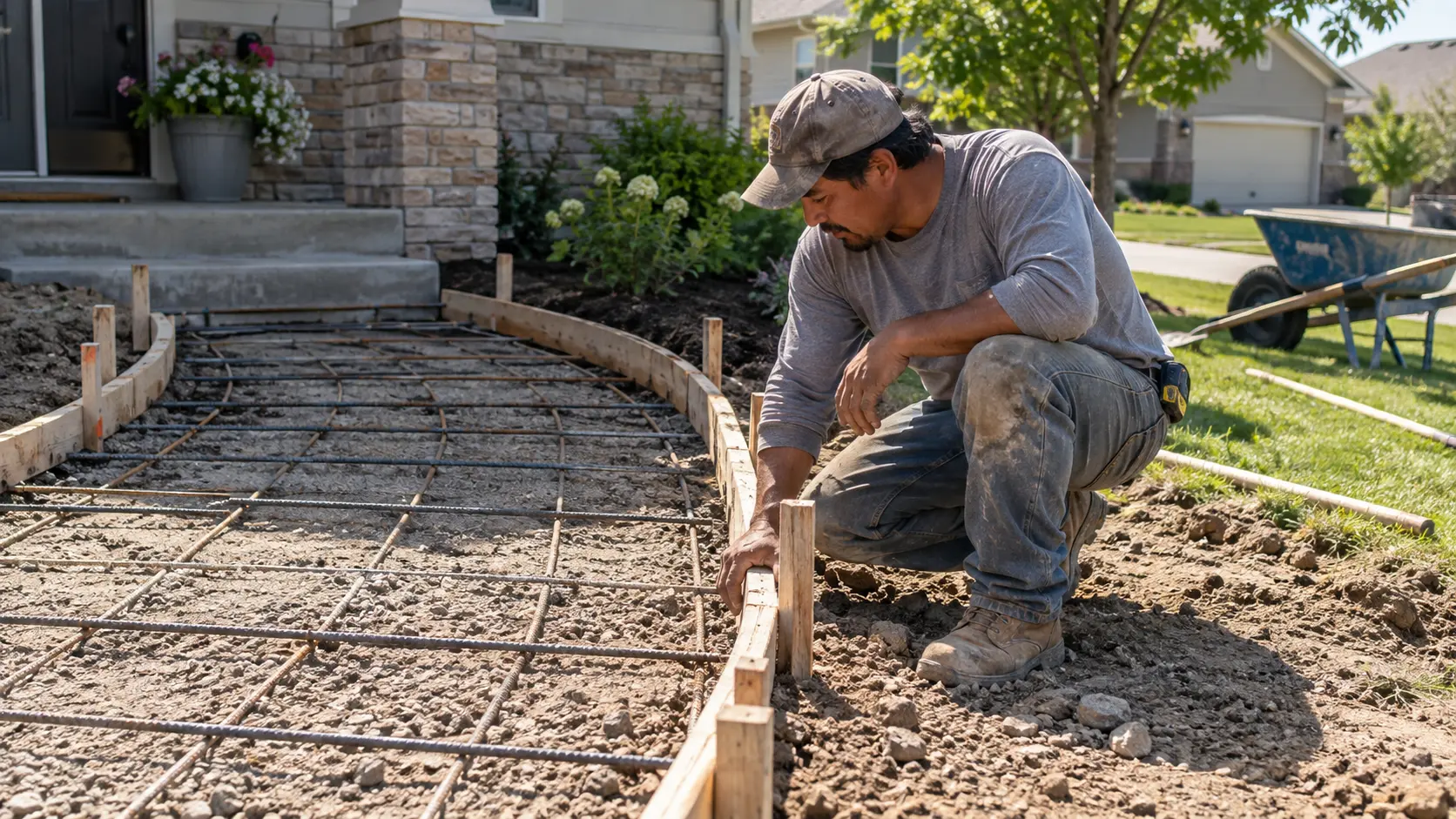
Document removal, excavation, base preparation, formwork, reinforcement or joints as designed, specified material, delivery method, placement, finish, curing and protection, cleanup, and inspection responsibility. For masonry, include substrate, mortar, reinforcement, flashing or drainage details where relevant to the assembly. Use applicable plans, manufacturer instructions, supplier requirements and local standards for the particular work; do not prescribe a universal slab thickness or curing period for every climate and load. ACI's hot- and cold-weather guides address how conditions affect placement and early protection. State who will protect fresh work, when access is restricted, and who approves any change if the exposed base differs from the assumption.
Book weather and delivery as real constraints
Check forecast and site readiness before confirming the crew, supplier delivery, pump or rental, and inspections. Reserve an alternate plan for unsuitable weather, blocked access, supplier delay, or failed site readiness. A concrete placement has interdependent crew and delivery times; a no-show laborer can affect more than one appointment. For illustration only: a crew with 32 field hours in a four-day week reserves eight for weather or corrections, leaving 24 planned hours. If a comparable small project uses 12 crew-calendar hours including setup and cleanup, at most two fit before allowing for curing visits or inspections. This is a hypothetical capacity worksheet, not an industry production rate. Track real hours and conditions by job type to set a promise the crew can meet.
Build a job-specific cost and cash worksheet
Separate opening costs such as training, tools, vehicle and forms from monthly fixed overhead and variable job costs. The job worksheet should include demolition, disposal, base material, concrete or masonry units, reinforcing, delivery, pump or rental, variable labor, finishing, protection, permits, and return visits. Get current supplier and rental quotes, including minimum loads, standby charges, cancellation rules, and payment timing. Maintain cash for weather postponements, supplier deposits, rejected loads, and callbacks. A square-foot price from another contractor does not capture restricted access, intricate edges, extra excavation, or a required engineer. Identify uncertain subsurface work as an allowance or excluded scope with a written change process.
Test contribution against actual capacity
For a consistent project class, collected price minus variable job cost is contribution to fixed overhead. SBA's simple break-even formula divides fixed costs by price minus variable cost. Hypothetical example: $6,000 monthly fixed expense, $5,000 collected per comparable project and $3,500 variable cost produce $1,500 contribution, so four completed projects cover fixed expense. The example excludes taxes, financing, job mix, unpaid invoices, bad-weather delays and return visits not included in variable cost. Compare four projects with actual crew, equipment, supplier and inspection calendars. A signed contract or scheduled pour is not a completed and collected job; watch cash obligations when projects cross month-end.
Close out with the right use instructions
Record approved scope, material and delivery tickets when relevant, inspections, observed placement and finishing details, weather and protection decisions, change orders, cleanup, and open punch work. Give the customer project-specific guidance for protection and return to use based on the actual material, design and conditions, rather than a blanket promise that every surface is ready after a fixed number of days. If movement or drainage concerns remain outside the scope, name the qualified follow-up. Track actual labor, material waste, rental time, weather delays, finish corrections and callbacks by job category. Use those records to improve estimating and decide whether the company has capacity to add a new material or structural project type.
Trade-specific reference point
A crack's appearance alone does not establish its cause. Concrete repair calls for evaluating condition and deterioration before choosing a method or preparing a firm scope.
This note supports a specific trade detail. It is not a diagnosis, a complete installation procedure, or a promise that every property needs the same work.
Practical checklist
- Choose supported flatwork or masonry projects, size range, territory and exclusions.
- Verify local permits, insurance, utility locating and structural design requirements.
- Plan task-specific excavation, formwork, vehicle and silica safety controls.
- Assess grades, drainage, base, use, material access and disposal on site.
- Document material, reinforcement, joints, finish, curing and inspection scope.
- Confirm supplier, crew, equipment, weather and site readiness before placement.
- Price demolition, base, delivery, rentals, labor, protection and return visits.
- Calculate contribution and break-even using actual completed-job costs.
- Get approval for unexpected base conditions and design changes before continuing.
- Record tickets, inspections, protection, use guidance and callbacks at handoff.
References and limits
These sources support the trade and business context; requirements vary by project and location. The job-specific observations, price, and safety plan belong with a qualified local professional.