 BookedWork Pro
Insulation business resources
Starting an insulation service: choose assemblies and expertise
Approx. 6 min read
Choose assemblies your crew can assess, screen moisture and safety concerns before installing, plan air sealing and insulation in sequence, and document actual work without promising universal savings.
Published September 24, 2026 · BookedWork Pro editorial guide. A qualified professional must verify field conditions, local rules, and product instructions before a technical recommendation or price.
Choose the first assemblies and materials
Attic floor top-ups, attic air sealing, wall retrofits, rim joists, crawlspaces, and roofline insulation require different access, moisture judgment, equipment and training. Choose one or two assemblies and the products the team can install under manufacturer instructions and local code. Define property types, territory, minimum access, and exclusions. A crew equipped to blow loose fill over an accessible attic floor does not automatically have the assessment skills or chemical protection needed for spray polyurethane foam or the design responsibility for an unvented roof. State whether removal, air sealing, ventilation modifications, pest or roof repairs, and electrical corrections are included or referred. Avoid advertising all comfort complaints as insulation jobs.
Verify rules and stop-work boundaries
Check local contractor registration, insurance, energy-code and permit requirements, and who may perform electrical, combustion, ventilation or structural work. Plan safe attic or crawlspace access, heat, dust, fall and confined-space evaluation as applicable. EPA advises that suspected vermiculite attic insulation may contain asbestos and should not be disturbed; stop and route that condition to an appropriately qualified professional under the job procedure. Screen older painted surfaces for applicable lead-safe requirements if the scope disturbs them. Spray foam work requires product-specific training, exposure controls and occupant planning; do not add it casually to a loose-fill service menu. A salesperson or intake form cannot clear unknown material or a combustion-safety concern remotely.
Assess the house before prescribing insulation
Ask the homeowner which rooms are uncomfortable, in which season, whether drafts or moisture are observed, the approximate age of the home, and any prior insulation or HVAC work. At the property document the assembly, accessible existing insulation, visible gaps, ducts, ventilation path, staining or leaks, exhaust terminations, recessed fixtures, flues and other penetrations relevant to the proposed work. State which conditions are hidden or outside the assessment. A high bill or hot bedroom can have causes beyond insulation, including equipment, distribution, windows, and use patterns. Do not guarantee a percentage saving from a photograph. Route active leaks, damp materials, suspected hazardous insulation, and unsafe electrical or combustion conditions to qualified review before covering them.
Sequence air sealing, safety and coverage
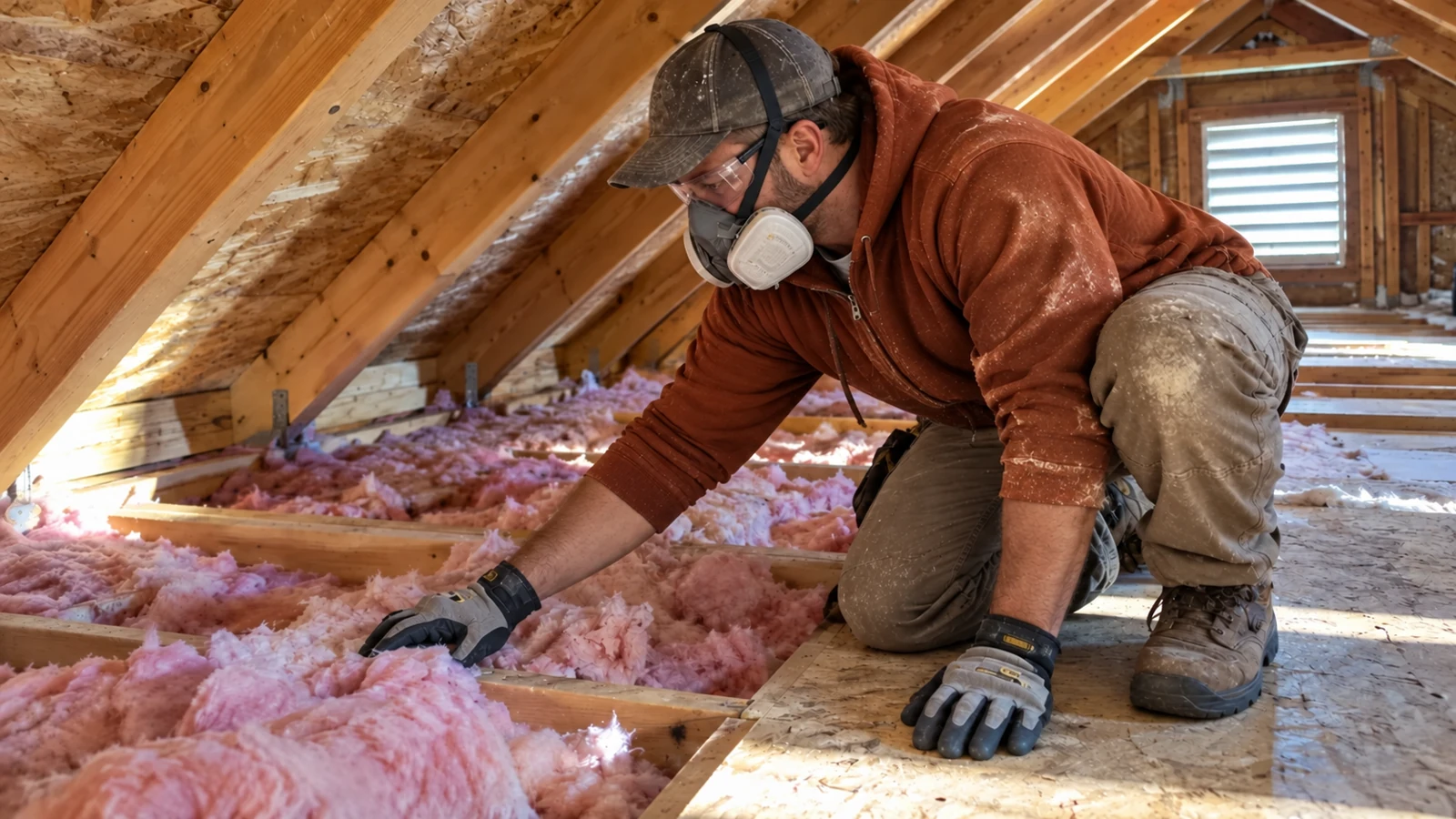
For a suitable existing vented attic, DOE guidance calls for air sealing attic-floor penetrations before adding insulation. The qualified plan should address access hatch, ceiling openings, appropriate clearances around heat sources, air paths at eaves, and any required ventilation or combustion-safety assessment. Then choose product and target installed coverage based on the actual assembly, adopted code, and manufacturer instructions. Do not bury a problem fixture, block an intended ventilation opening, or assume that adding more material solves an unresolved roof leak. For walls or crawlspaces, define the assembly's moisture and air-control approach separately; copying an attic detail into another assembly can create a different problem. Document the inspections and trade handoffs that must happen before installation.
Write a measurable scope and readiness gate
The proposal should name rooms or assemblies, accessible areas, existing conditions, air sealing work, material and specified installed amount or coverage, baffles or other components if needed, protection, exclusions, and cleanup. Identify who moves stored items, provides access and electricity, repairs leaks, and verifies any required electrical or ventilation changes. Explain how concealed conditions or inaccessible bays alter scope and price. Confirm the crew, material, machine, access and site readiness before finalizing the installation slot. A label on the bag is not evidence that the entire attic received uniform installed coverage. Record the actual material, quantities, depth or other product-specific field measures, and areas not treated at closeout.
Build capacity around prep and access
Estimate travel, setup, hazard review, air sealing, material delivery, application, cleanup and a return visit if one is needed. Hypothetical example: a crew has 32 available field hours in four days and reserves eight for uncertain prep or callbacks. If a familiar attic package takes 12 crew-calendar hours including travel and cleanup, at most two such jobs fit the remaining 24 hours. A difficult hatch, stored belongings, missed leak repair or ventilation correction can reduce capacity. This is a planning illustration, not a production benchmark. Keep separate calendar types for assessment, simple installation and complex assemblies, and record actual crew hours by job type before widening the advertised response window.
Price jobs from the actual assembly
Separate one-time equipment and training, monthly fixed overhead, and variable job expense. Include material, air-sealing supplies, machine rental or maintenance, protective equipment, delivery, disposal, variable labor, travel and subcontracted corrections. Get local quotes and maintain cash for slow periods, callbacks and delayed payment. For comparable completed work, collected price minus variable job cost is contribution toward fixed costs. The SBA's simple break-even calculation divides fixed costs by price minus variable cost. Hypothetical example: $5,000 monthly fixed cost, $2,000 collected per comparable job and $1,000 variable cost yield $1,000 contribution, or five completed jobs to cover fixed cost. This ignores taxes, financing, mixed assemblies and unpaid invoices; compare five jobs with real crew and equipment capacity.
Verify and explain the outcome
At closeout record the preexisting observations, completed air sealing and insulation areas, product identifiers, installed quantities or measures, photos where appropriate, inaccessible spots, cleanup, and any follow-up by another trade. Give the owner product-specific care and access guidance and a clear callback contact. Explain that the work addresses the documented assembly but a single insulation job cannot guarantee a specific bill reduction or cure every comfort concern. If testing was included, report the method and result without claiming a measurement was made when it was not. Compare estimated and actual labor, material use, access delays, returns and callbacks by assembly each month; use those facts to refine the offer and the scope template.
Trade-specific reference point
An attic assessment should consider air leaks as well as insulation. ENERGY STAR explains how attic air sealing and insulation work together; actual scope depends on inspecting the home.
This note supports a specific trade detail. It is not a diagnosis, a complete installation procedure, or a promise that every property needs the same work.
Practical checklist
- Choose supported assemblies, materials, property types, territory and exclusions.
- Verify local code, permits, insurance and product-specific qualifications.
- Write a stop-work referral for suspected vermiculite, leaks and unsafe conditions.
- Assess existing coverage, air paths, moisture, ventilation and access on site.
- Define air sealing, safety and trade corrections before adding material.
- Specify product, installed coverage, protection, cleanup and excluded areas.
- Confirm site readiness, material, equipment and crew before scheduling.
- Price preparation, materials, labor, equipment and return visits separately.
- Calculate break-even volume and compare it with crew capacity.
- Record installed work, actual measures, open issues and customer handoff.
References and limits
These sources support the trade and business context; requirements vary by project and location. The job-specific observations, price, and safety plan belong with a qualified local professional.