 BookedWork Pro
HVAC business resources
Repair or replace HVAC equipment: document the decision
Approx. 3 min read
A single failed part does not necessarily require a new system; recurring breakdowns and unsuitable sizing can change the economics. Ask about repair history and the homeowner's comfort goals.
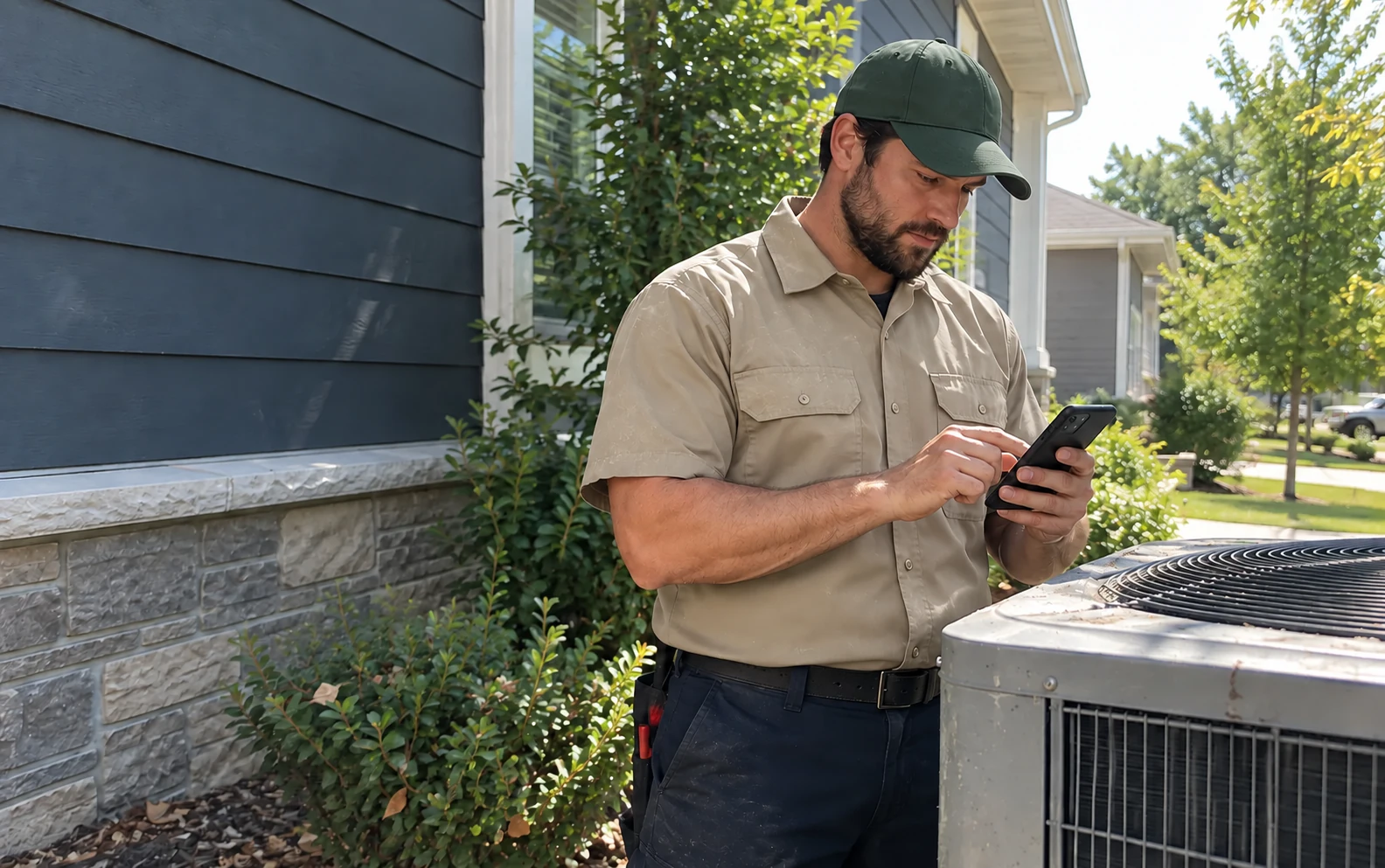
Published September 24, 2026 · BookedWork Pro editorial guide. A qualified professional must verify field conditions, local rules, and product instructions before a technical recommendation or price.
What the inquiry is really about
A single failed part does not necessarily require a new system; recurring breakdowns and unsuitable sizing can change the economics. Ask about repair history and the homeowner's comfort goals.
What a professional needs to establish
Inspect the actual fault and relevant system condition, then consider age, parts availability, efficiency, compatibility, and distribution. Avoid diagnosing from an error code sent through a web form.
How to explain the scope and next step
Show the repair scope, what it cannot solve, and a separate replacement option if justified. State the expected work and warranty for each without promising a specific lifespan.
Put the decision into practice
A successful repair begins with a bounded finding: what failed, where, how it was verified, and what adjacent parts remain uninspected. Investigate the cause before prescribing a product or patch. Explain which observed condition the repair addresses, what is excluded, and how the result will be checked. A patch can be appropriate for a local defect and still be the wrong recommendation for a broader pattern of failure. If the problem is structural, concealed, or spans trades, arrange qualified review rather than promising an instant remedy. Present a larger replacement as a separate choice with its own scope.
Prove the repair addressed its stated target
Agree on how completion will be checked before starting: an operational test, inspection, measured condition, or documented visual result appropriate to the job. Save the original observation and the work performed so a later callback can distinguish a recurrence from a new fault. If the source remains uncertain, do not replace uncertainty with a confident invoice description. Explain what the team did establish and whether monitoring or an additional professional assessment is reasonable.
Trade-specific reference point
Replacement equipment should be sized from measured heating and cooling loads, not the existing unit's label alone. The quote may depend on a professional load calculation and the condition of related equipment.
This note supports a specific trade detail. It is not a diagnosis, a complete installation procedure, or a promise that every property needs the same work.
Practical checklist
- Record the customer's own description and the property location.
- Confirm the site facts before making a technical claim.
- Explain the work, exclusions, and who owns the next step.
- Record a realistic response or site visit window.
- Close the lead when the customer books, declines, or opts out.
References and limits
These sources support the trade and business context; requirements vary by project and location. The job-specific observations, price, and safety plan belong with a qualified local professional.